
Mill Valley sits in the shadow of Mount Tamalpais, and many of its homes sit in the shadow of redwoods. Drive up Cascade Drive or into Blithedale Canyon, and the air turns cooler and damper. Sunlight shows up late and leaves early.
That setting is a big part of why people love living here, but it is also tough on the machines that keep the lights on. Generator maintenance in Mill Valley is a different job than it is in a sunny Novato subdivision. Canyon homes expose equipment to moisture, debris, and wildlife that flatland homes in Marin County rarely deal with.
In July 2026, PG&E warned residents on the slopes of Mount Tam about a possible Public Safety Power Shutoff. It was Mill Valley’s first potential PSPS since 2019. For plenty of homeowners, it was a reminder that generator maintenance had slipped off the to-do list years ago.
This guide covers what redwood canyon conditions do to a generator, what a thorough service includes, and how often to schedule one.
Why Generator Maintenance in Mill Valley Is Different
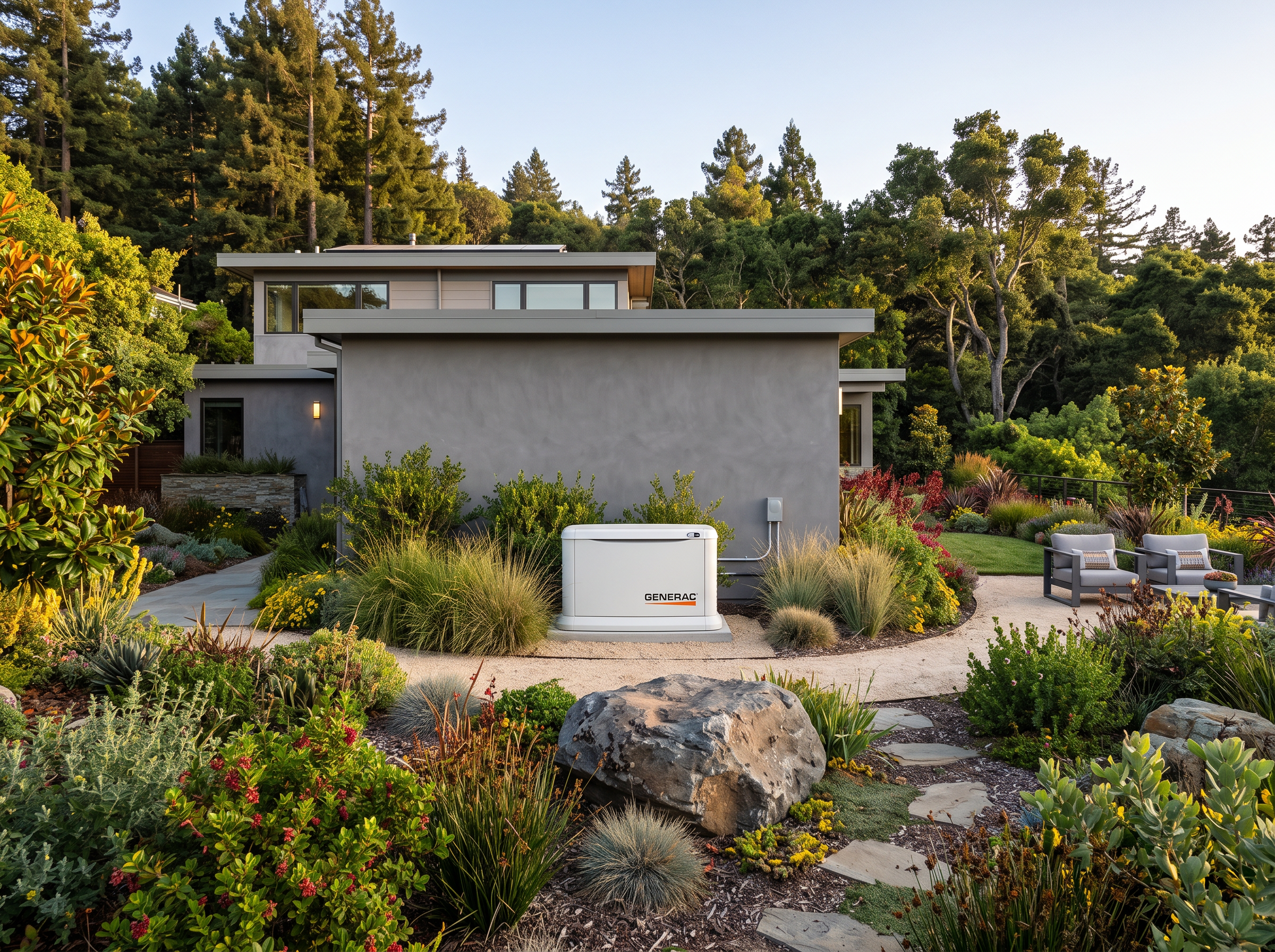
Most advice online is written for a unit sitting on a sunny slab in an open yard. Canyon homes in Mill Valley rarely look like that. The generator is often tucked beside the house on a shaded, sloped lot, a few feet from a redwood trunk.
Fog Drip and Constant Moisture
Coast redwoods are built to catch fog. According to the National Park Service, redwoods get up to 40% of their annual water from fog. Their needles collect it and drip it to the ground, which is great for the trees. For a generator under the canopy, that means a steady drizzle on the enclosure through much of the summer.
Moisture does its damage slowly. It corrodes battery terminals, creeps into wire connectors, and leaves a film on the controller’s circuit board. In deep shade, the enclosure may never fully dry out between fog banks. Routine generator maintenance catches this corrosion while it is still a cleaning job, not a parts replacement.
Needles, Duff, and Leaf Litter
Redwoods, bay laurels, and tanoaks drop a constant supply of needles and leaves. That debris piles up on the enclosure roof, packs into the intake louvers, and builds around the base. Air-cooled generators need open airflow to stay cool under load. A unit with clogged louvers can overheat and shut itself down halfway through an outage.
Debris near a unit is also a fire concern. Much of Marin County sits in wildfire country, and dry duff beside a hot exhaust outlet is exactly what fire officials ask homeowners to clear.
Wildlife That Moves In
A quiet, sheltered metal box in the woods looks like a great home for a rodent. Wood rats and mice nest inside enclosures and chew through wiring insulation. Wasps and spiders build in vents and around the exhaust. Homes that back onto open space near Mount Tamalpais see this often, and the damage usually stays hidden until the generator tries to start.
The Long Quiet, Then the Sudden Demand
Generators in Mill Valley tend to sit idle for months. Then a wind event or a PSPS hits, and the unit runs for a day or more without stopping. That pattern is tough on any engine.
The weekly self-test does not tell the whole story. It usually runs the engine for a few minutes without carrying your home’s electrical load. A generator can pass that test every week and still fail when it must power your refrigerator and heating for 30 hours.
Long outages also add run hours fast. Generac’s guidance for continuous-use maintenance calls for shutting the unit down for at least 30 minutes every 24 hours to check the oil and inspect for leaks. It also calls for an oil and filter change at 200 hours, plus a new air filter and spark plugs at 400 hours. A generator tune-up before storm season, and a check after any long outage, keeps you ahead of those intervals.
What a Professional Generator Tune-Up Includes
A proper service goes well beyond topping off the oil. Here is what Rocky Hill Electric covers during generator maintenance, with extra attention to the issues canyon homes face.
Engine and Battery Service
We change the oil and oil filter, then inspect or replace the air filter and spark plugs based on run hours. On canyon properties, we pay close attention to the air filter, since fine debris and moisture shorten its life.
The starting battery gets a load test, not just a voltage check. Cool, shaded sites are harder on batteries, and a dead battery is one of the most common reasons a generator fails during an outage. We also clean the terminals and confirm the battery charger is working.
Airflow, Fuel, and Enclosure Checks
This part of the generator checkup matters most for redwood canyon homes. Every item below addresses a problem we see regularly in Marin County hillside neighborhoods.
- Louvers and intake — We clear needles, leaves, and nesting material so the engine can breathe and cool properly under load
- Enclosure seals and hardware — We check for rust, damaged gaskets, and loose panels that let moisture and pests inside
- Wiring inspection — We look for chewed insulation, corroded connectors, and moisture inside the control compartment
- Fuel system — We inspect the gas line, regulator, and connections for leaks or wear, which matters on sloped lots where soil shifts over time
Transfer Switch and Full Load Test
Last, we run the generator under real household load. This confirms the automatic transfer switch moves your home to generator power and back again. It is the only way to know the system will actually carry your home when PG&E cuts power to Marin County neighborhoods.
We also check placement and exhaust direction. In October 2020, a Mill Valley restaurant on Bernard Street caught fire when its backup generator’s exhaust heated a nearby wall. Tight canyon lots make clearance mistakes easy, so we confirm that the exhaust points away from walls, windows, and vegetation.
How Often Should You Schedule Generator Maintenance in Mill Valley?
The right schedule for generator service depends on how exposed the generator is. Here is the schedule we recommend:
- Once a year at minimum — Late summer or early fall is ideal, before the wind season that drives most PSPS events in Marin County
- Twice a year for shaded canyon sites — A spring visit clears winter debris and checks for moisture damage. A fall visit preps the unit for the wind season
- After any outage longer than 24 hours — Extended run time burns through oil life and can expose weak parts
- Before the warranty window closes — Many manufacturers expect documented annual service, so skipping visits can complicate a future claim
Between visits, you can help. Sweep needles and leaves away from the unit after windy days, and glance at the controller’s status light once a week. Make sure your carbon monoxide detectors work, too. These small habits make every generator tune-up faster and cheaper.
Signs Your Generator Needs Attention Now
Some problems should not wait for the next scheduled generator health check. If you notice any of the following, call for maintenance right away.
- A red or yellow warning light on the controller
- A missed or unusually rough weekly exercise cycle
- Rust stains, droppings, or nesting material around the enclosure
- A starting battery that is more than three or four years old
If your generator has already failed, our guide to standby generator repair in Mill Valley walks through what to do next.
Why Mill Valley Homeowners Call Rocky Hill Electric
Rocky Hill Electric is a licensed electrical contractor in San Rafael and a short drive up Highway 101 from Mill Valley. We are Generac certified, and we service units installed by other companies too. Our team also holds SPAN and Tesla Energy certifications, which help when your backup system works alongside a smart panel or battery storage.
We know these neighborhoods, from the narrow, winding streets of Homestead Valley to the shaded lots of Blithedale Canyon. That local knowledge shapes every visit across Marin County.
You can learn more about our full range of electrical services in Mill Valley, including electrical panel upgrades for older homes that need more capacity. For general tips on choosing and caring for a unit, see our backup generator guide.
Areas We Serve Across Mill Valley and Marin County
We provide generator maintenance in Mill Valley and throughout Marin County, including the shaded canyon and hillside neighborhoods that need it most.
- Mill Valley
- Homestead Valley
- Tamalpais Valley
- Strawberry
- Tiburon
- Larkspur
- Corte Madera
- San Rafael
- Novato
Your home might sit under the redwoods near Old Mill Park or on a sunny ridge above Richardson Bay. Either way, our team can reach you quickly. Every neighborhood in Mill Valley is a short trip from our San Rafael office.
Schedule Your Generator Maintenance in Mill Valley Today
The next PSPS will not wait for a convenient time. A generator that sat under the canopy all year deserves a real checkup before the lights go out, not after. Book your generator maintenance in Mill Valley now, while the schedule still has room before wind season.
Call Now For a Free Estimate: 415-523-5201
Frequently Asked Questions About Generator Maintenance in Mill Valley
1. How often do I need generator maintenance in Mill Valley?
Plan on at least one visit per year, ideally in late summer or early fall. Generators in shaded redwood canyons across Mill Valley benefit from a second visit in spring. You should also schedule service after any outage that runs longer than 24 hours.
2. What is included in a generator tune-up?
A full generator checkup includes an oil and filter change, an air filter and spark plug inspection, and a battery load test. We also clear the louvers, inspect wiring and the fuel system, and run a full load test through the transfer switch.
3. Why do redwood canyon homes need more frequent generator service?
Canyon homes deal with fog drip, constant shade, falling needles, and rodents. Together, these speed up corrosion, block airflow, and damage wiring. More frequent generator maintenance catches these problems before they cause a failure during an outage.
4. My generator runs its weekly self-test. Isn't that enough?
No. The weekly exercise usually runs the engine for a few minutes without powering your home. It will not reveal a weak battery under load, a sticking transfer switch, or overheating from blocked louvers. Only a full load test confirms the system will carry your house.
5. Can I handle generator maintenance myself?
You can handle simple tasks, like clearing debris and watching the status light. Oil changes, battery load tests, fuel system checks, and transfer switch testing should be done by a licensed professional. Professional service records from each generator tune-up also help protect your manufacturer warranty.
6. Does generator placement matter on a shaded hillside lot?
Yes. Placement affects airflow, moisture exposure, and fire safety. Exhaust should point away from walls, windows, decks, and vegetation, and the unit needs the clearances listed by the manufacturer. We check placement during every visit across Marin County.
Still Have Questions? Let’s Talk