Mill Valley sits at the foot of Mount Tamalpais, wrapped in one of the densest redwood and oak canopies in Marin County. That is what makes it one of the most beautiful places in the Bay Area. It is also what makes it one of the most outage-prone. Mature trees that overhang PG&E’s distribution lines shed branches throughout the year, and the hillside terrain above Homestead Valley, Cascade Canyon, and Tamalpais Valley creates the exact wind and fuel conditions that trigger Public Safety Power Shutoffs.
PG&E specifically targeted Mill Valley‘s mountainside residents near Mount Tamalpais in a July 2026 PSPS event, using advanced AI weather modeling to identify the area as high-risk. The utility opened a Community Resource Center at the Mill Valley Community Center, 180 Camino Alto, to support residents during that shutoff. The City of Mill Valley’s PSPS preparedness page advises residents to ensure backup generators are ready to safely operate before any event occurs. That is good advice. But a generator that was installed after the 2019 PSPS and has not been fully serviced since is a system that may not be as ready as it looks.
Rocky Hill Electric provides expert standby generator repair for homeowners across Marin County. This guide covers what causes generators to fail in the city’s specific environment, how to recognize the warning signs before an outage exposes them, and what generator repair in Mill Valley actually involves.
Why Mill Valley Generators Fail More Often Than Homeowners Expect
The Canopy Problem
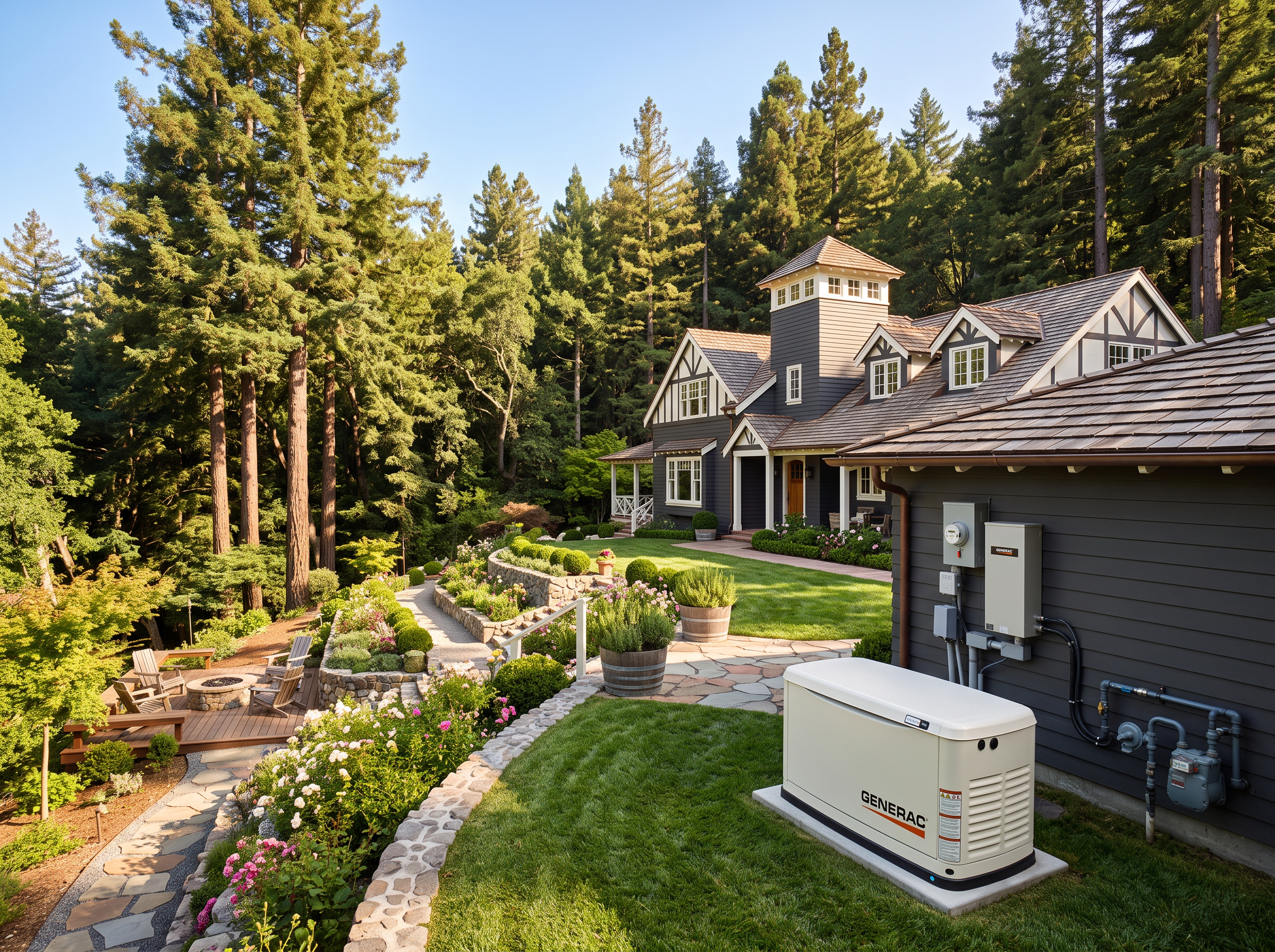
Mill Valley, CA, has a tree canopy unlike almost anywhere else in central Marin County. Redwood groves, tanoak, and coastal oak line the streets above Downtown Mill Valley and into the canyons beyond. That canopy creates the moisture, shade, and falling debris conditions that directly affect outdoor generator enclosures. Humidity trapped under dense canopy cover accelerates corrosion on battery terminals and electrical connections. Leaf debris accumulates in air intakes. And the root systems of large trees can shift soil and conduit runs in ways that create stress on external fuel and electrical connections over time.
A standby generator that sits in a shaded, leaf-covered side yard in Homestead Valley or Cascade Canyon for years between service visits will accumulate these problems invisibly. The unit may complete its weekly self-test without flagging a fault. The problems only surface when the grid drops and the system is called upon to run at full household load for hours. That is when generator repair in Mill Valley calls come in.
The 2019 Generation Is Now Middle-Aged
The city was specifically named in PG&E’s 2019 PSPS event alongside Bolinas, Fairfax, Muir Beach, and Stinson Beach, with approximately 9,855 Marin County customers losing power. That event drove a wave of generator installations across Mill Valley as homeowners responded to the experience of multi-day outages. Systems installed in 2019, 2020, and 2021 are now five to seven years old.
That age range is significant. Most unit batteries have a useful life of three to five years under normal cycling conditions. Transfer switches accumulate contact wear from years of weekly self-tests. Fuel regulators drift. Control board components age. A generator installed right after 2019 is not old enough to replace, but it is absolutely old enough to repair. Our post with expert tips for choosing and maintaining backup generators explains how the four-to-seven-year range is the most common window for first-time repair.
Warning Signs Your Mill Valley Generator Needs Repair
Symptoms You Can Catch Before the Next PSPS Event
Fault Codes on the Control Panel
Most modern standby generators display fault codes when something needs attention. A battery voltage warning, a low oil alert, a transfer switch communication fault, or a high coolant temperature flag are all signs that generator repair in Mill Valley is needed. Clearing the code and hoping it does not return is not a fix.
Failed or Skipped Weekly Self-Test
If your backup power unit is not running its scheduled weekly self-test, or if it runs but immediately flags a fault, something is wrong. The self-test is designed to reveal these issues before an actual outage. A failed self-test is the system doing its job by telling you something needs attention. Call for standby generator repair before the next PSPS event, not after.
Unusual Sounds During Operation
A healthy generator runs with a consistent, smooth engine note. Surging, hesitation, knocking, or a rougher-than-normal idle during the self-test are early signs of fuel delivery problems or engine wear issues. Mill Valley generators running in humid, leaf-rich environments sometimes develop air intake restrictions that cause exactly these symptoms. Our post on troubleshooting common residential electrical problems covers how mechanical symptoms in generators often correlate with electrical anomalies in the connected panel.
Visible Corrosion or Debris Around the Enclosure
A generator enclosure in a Mill Valley redwood grove accumulates debris faster than one in an open suburban yard. If the air intake vents are visibly clogged, if the battery terminals show white or green corrosion deposits, or if water has pooled inside the enclosure, these are physical signs that the system needs attention. Generator repair in Mill Valley for these issues is usually straightforward but gets more expensive the longer it is left unchecked.
Symptoms That Surface During an Outage
The Generator Did Not Start
This is the most painful version of the problem. A dead battery, a stuck fuel solenoid, or a transfer switch that failed to signal the generator to start are all common causes. Each is repairable. The problem is that discovering them during an active PSPS event compresses the timeline for getting a technician on-site.
The Generator Started but the House Stayed Dark
This is a transfer switch failure. The unit is running and producing power, but the automatic switch did not complete the handoff from grid to backup. The refrigerator is still off, the lights are still dark, and the generator is running in the background with nowhere to send its output. This is one of the more common repair calls we receive after PSPS events.
The Generator Shut Down After Running for an Hour or Two
A generator that starts cleanly but trips off under sustained load has a fuel delivery issue, an overheating problem, or a circuit overload. Homes with large HVAC systems, multiple refrigerators, or heavy electrical loads sometimes exceed what a generator sized for basic outage protection can sustain continuously. Diagnosing the cause is the first step of generator repair in Mill Valley in these cases.
The Most Common Generator Repair Issues in Mill Valley
Dead Starting Battery
The starting battery is the most common single cause of a generator that will not start across all of Rocky Hill Electric’s service area, and Mill Valley, CA, is no exception. The canopy-shaded, temperature-cycling environment that generators sit in throughout Homestead Valley, Almonte, and Strawberry is harder on batteries than open, ventilated locations. A battery that tests at adequate voltage during a low-draw self-test can still fail to deliver the amperage required to crank a cold engine during an actual PSPS event. Generator repair in Mill Valley for a dead battery is usually a same-visit fix. Our circuit breaker maintenance post explains how battery and circuit health are connected across a home’s full electrical system.
Transfer Switch Failure
The automatic transfer switch is the component that makes a standby generator automatic. It monitors the grid, detects the outage, shifts the home’s load to backup power, and reverses the process when grid power is restored. Transfer switches accumulate contact wear with every switching event, including the weekly self-test cycle. A switch that has completed hundreds of test cycles and multiple real outage events over seven years has significant wear on its contacts and relays. Standby generator repair on a failed transfer switch is one of the more involved jobs, but it is far more affordable than a full system replacement and is the correct fix for the majority of units in the five-to-ten-year-old age range.
Fuel System Issues
Both natural gas and propane systems develop fuel delivery problems over time. Regulators drift out of calibration, fuel line connections loosen from years of temperature cycling, and solenoid valves that control fuel flow can stick in their seats. A generator that starts and runs cleanly at self-test load but shuts down under the full electrical demand of a Mill Valley hillside home almost always has a fuel delivery issue. Pressure testing the fuel supply at the generator connection and inspecting the regulator and solenoid condition is standard in any diagnosis that is part of generator repair in Mill Valley. Our post on standby generator install mistakes explains how poor original fuel line routing and improper regulator sizing create the conditions for exactly these failures.
What To Do When Your Mill Valley Generator Fails During an Outage
Do Not Force a Manual Start if the Control Panel Is Showing a Fault Code
The fault code is the system protecting itself. Forcing a start over a fuel fault can cause further damage to the regulator or solenoid. Note the code, call Rocky Hill Electric for standby generator repair in Mill Valley, CA, and wait for a technician rather than cycling the start repeatedly.
Check the Obvious Before Calling
An empty propane tank, a tripped circuit breaker on the generator’s own electrical supply, or a recently blown fuse on the control board are all causes of a failed start that homeowners can verify themselves. If none of these is the issue, the fault is internal and needs a licensed technician.
If the Generator Is Running but the House Is Still Dark, Do Not Attempt To Backfeed the Panel
This is a transfer switch fault. The grid may still be partially connected, and manually backfeeding a panel in that condition creates electrocution risk for utility workers on the line. Call for generator repair in Mill Valley and wait.
The City of Mill Valley advises residents to contact PG&E directly for outage-related questions and to use PG&E’s outage center to monitor restoration status while waiting for a technician. Knowing whether the outage is a PSPS event or a storm-related unplanned outage affects the expected restoration timeline and the urgency of the repair.
Why Choose Rocky Hill Electric for Generator Repair in Mill Valley?
We are licensed and Generac certified for standby generator repair in Mill Valley, CA. We also service Kohler, Champion, Honeywell and Cummins systems. Our technicians know Mill Valley‘s neighborhoods well enough to understand that a generator in a shaded redwood canyon in Cascade Canyon needs a different assessment than one on an open lot in Strawberry near Highway 101. Environment and siting context matter in every repair diagnostic.
We approach every visit as a full system diagnostic, not a parts-swap. That approach is how we consistently find the underlying problem rather than just the presenting symptom. For homes that also need an electrical assessment alongside the generator repair, our post on electrical services in Mill Valley covers how panel condition, wiring age, and circuit load affect generator performance across a full home system. And our circuit breaker warning signs post for Mill Valley explains how breaker-level issues can affect transfer switch behavior.
Rocky Hill Electric also provides standby generator repair throughout neighboring Marin County communities. Our standby generator repair in Nicasio and standby generator repair in Inverness posts cover how the same repair disciplines apply across different terrain and property types throughout West Marin. We also handle new installations when repair is not the right answer.
Areas We Serve Across Mill Valley and Marin County
We provide generator repair in Mill Valley and standby generator repair across Marin County communities, including:
- Homestead Valley
- Cascade Canyon
- Tamalpais Valley
- Downtown Mill Valley
- Strawberry
- Almonte
- Alto
- San Rafael
- San Anselmo
- Fairfax
- Novato
- Stinson Beach
- Bolinas
- Corte Madera
Whether your property is in the redwood canyons above Mount Tamalpais State Park, on a hillside overlooking Richardson Bay, or near the Marin County Open Space above Blithedale Canyon, our licensed technicians are nearby and ready to help.
Call Rocky Hill Electric for Generator Repair in Mill Valley
Mill Valley, CA, has always lived with wildfire risk. The redwood canyons and hillside terrain that define the community’s character are the same features that put it in PG&E’s PSPS targeting zone year after year.
A standby generator that was installed after 2019 and has not been fully serviced since is a system that may not be ready when the next PSPS event hits. Rocky Hill Electric is your licensed, local choice for generator repair in Mill Valley and standby generator repair across Marin County.
We are Generac certified, SPAN certified, and Tesla Energy certified. And we handle every generator repair in Mill Valley, CA, as a complete diagnostic visit so you know exactly what was fixed and what to watch for next.
Do not find out your generator needs repair during the next shutoff. Call Now For a Free Estimate: 415-523-5201
Frequently Asked Questions About Generator Repair in Mill Valley
1. Why do generators fail more often in Mill Valley than in other Marin County communities?
Mill Valley, CA's dense redwood canopy creates a humid, debris-rich environment that accelerates corrosion on battery terminals, electrical connections, and air intake components. Combined with the hillside terrain that makes this city a documented PSPS target zone, generators here face more real-world demand and harsher storage conditions than units in more open Marin County settings. Annual service visits and prompt generator repair in Mill Valley when fault codes appear are the most effective way to stay ahead of these environment-driven failures.
2. My generator passed its self-test last week. Why did it fail during the PSPS event?
The self-test runs the generator at minimal or no load for a short cycle. It confirms the engine starts and the control board communicates, but it does not replicate the sustained, full-household load of an actual outage. A battery that holds up during a 5-minute self-test can fail to deliver sustained amperage over several hours. A fuel regulator that supplies adequate pressure at low load may not keep up under full demand. Standby generator repair after a failed real-world event almost always involves components that passed their self-tests.
3. How do I know whether my generator needs repair or full replacement?
Most failures in the four-to-ten-year age range are repairable. Dead batteries, stuck transfer switches, fuel delivery issues, and control board faults are all fixable without replacing the unit. Full replacement makes more sense when the unit is over 20 years old, when multiple major systems have failed simultaneously, or when the repair cost approaches the cost of a new installation. Rocky Hill Electric provides an honest assessment at every diagnostic visit for generator repair in Mill Valley before recommending either path.
4. Does generator repair in Mill Valley require a permit?
Routine component-level standby generator repair in Mill Valley, CA, such as battery replacement, transfer switch servicing, or fuel system adjustment, typically does not require a permit. Work that modifies the transfer switch wiring, changes the fuel connection, or alters the connection to the home's electrical panel may require a permit through the city’s Building Department. Rocky Hill Electric advises on permit requirements during every repair visit.
5. Can Rocky Hill Electric repair a generator that was installed by another company?
Yes. We provide generator repair in Mill Valley, CA, for Generac, Kohler, Champion, Honeywell, and Cummins standby systems regardless of who originally installed them. We carry diagnostic equipment for all major brands and can access control board fault history on any system with a standard diagnostic interface.
6. How quickly can Rocky Hill Electric respond to a generator repair call during an active PSPS event?
During active PSPS events, demand for standby generator repair across Marin County increases significantly. Our team prioritizes repair calls for households with medical equipment dependencies and properties with livestock or critical refrigeration needs. The best way to avoid competing for storm-season repair availability is to schedule a pre-season diagnostic visit in summer, before the PSPS window opens. Call 415-523-5201 to get on our schedule.
Still Have Questions? Let’s Talk