Stinson Beach is the kind of place people drive an hour to reach and then wonder why they ever leave. The beach cottages along Calle del Arroyo, the lagoon homes tucked inside Seadrift, the hillside retreats in the Highlands with Pacific views across Bolinas Lagoon — every property here has a specific character that makes it worth protecting and upgrading thoughtfully.
For residents and vacation homeowners who drive electric vehicles, that thoughtfulness extends to how and where they charge. There are only four public EV charging station ports within 15km of Stinson Beach — and the ones at the Golden Gate National Recreation Area were installed for park visitors, not for daily residential use. A homeowner who drives an EV cannot depend on that infrastructure for everyday charging. A home EV charger in Stinson Beach is the only practical solution.
But EV charger installation in Stinson Beach is not the same as installation in Fairfax or San Rafael. The coastal marine environment creates specific installation requirements that inland electricians often do not have to account for. Salt-laden mist, high humidity, and ocean air attack electrical connectors, hardware, and outdoor components faster here than almost anywhere else in Marin County. Rocky Hill Electric provides expert coastal EV charger installation for homeowners across West Marin, using weather-tight connections and corrosion-resistant hardware specified for the marine environment.
Why Home Charging Is the Only Real Option in Stinson Beach
The Public Charging Gap
The public charging infrastructure near Stinson Beach was not built for residents. It was built for visitors to Point Reyes National Seashore and the Golden Gate National Recreation Area. The California Energy Commission documented the installation of EV chargers at Stinson Beach as part of a national park grant project — a visitor amenity, not a community charging resource. Depending on those ports for daily residential use is not a realistic plan.
For a homeowner commuting to Mill Valley, San Rafael, or Fairfax and back, a home EV charger installation in Stinson Beach on a dedicated 240-volt circuit changes everything. Your vehicle charges overnight. Every morning it is fully charged. No detours, no waiting for a port to open, no driving past the one station that is already occupied by a tourist’s rental car. That is what a proper Level 2 EV charger installation at your own property delivers.
The Coastal Installation Difference
What makes EV charger installation in Stinson Beach distinct is not just the absence of public alternatives. It is the environment in which the charger will function. Coastal conditions like salt spray and moisture can accelerate corrosion, especially on exposed metal components, and that applies directly to an outdoor charger. The hardware mounting, the conduit, the wire terminations, and the charger enclosure itself are all subject to the same marine environment that challenges every other metal component on a coastal property.
A coastal EV charger installation done correctly uses weather-tight connections, marine-grade hardware, and corrosion-resistant materials at every external connection point. A standard inland installation approach applied to a Stinson Beach property is not adequate for the long term. We at Rocky Hill specify and install charger hardware rated for coastal environments on every EV charger installation in Stinson Beach that we complete.
The Three Property Types and Their EV Charger Considerations
Beach Cottages in Town
The beach cottages near the Stinson Beach town center — many built in the 1940s and 1950s along the calles and patios subdivisions — are the oldest properties in the community and the most directly exposed to Pacific salt air. Their electrical panels, in many cases, have not been updated since original installation. A home EV charger at a beach cottage almost always begins with a panel assessment to confirm whether there is capacity for a dedicated 50-amp charger circuit.
If the panel is at capacity or is a known hazardous brand, a panel upgrade comes before the charger. Our post on electrical panel upgrade work in Stinson Beach covers this situation and explains what the panel upgrade process entails for properties in this community specifically.
Seadrift Lagoon Homes
Seadrift is a private gated community where homes sit along canals and lagoon shorelines. The moisture exposure here comes from multiple directions simultaneously: Pacific air from the west, lagoon humidity from all sides. For a coastal EV charger installation in Seadrift, the choice of charger location, mounting hardware, and conduit routing requires more careful thought than with a standard property. Waterfront-adjacent installations need enclosures with higher ingress protection ratings and connections specified for continuous moisture exposure.
We assess every Seadrift installation on its own terms. The right Level 2 EV charger installation for a lagoon-front Seadrift home has different specifications than the right installation for a hillside property, and we design each project accordingly.
Highlands Hillside Properties
The Highlands above Stinson Beach face the most direct wind exposure in the community, with Pacific fog and salt-laden air rolling in off Mount Tamalpais on a near-daily basis. Hillside properties also often feature garages or carports set apart from the main structure, which can mean longer conduit runs between the panel and the preferred charger location.
A home EV charger installation at a Highlands property requires the same marine-grade hardware as any other coastal installation, plus careful planning of the conduit path between the panel and the charger.
Our team plans every EV charger installation around the specific layout and exposure of your property, instead of using a generic template.
What the 2026 Code and Incentives Mean for Stinson Beach Homeowners
The 2026 NEC Update
The 2026 National Electrical Code update now requires a qualified, licensed installer for all Level 2 charger setups. Do-it-yourself Level 2 EV charger installation is no longer permitted under the current code. For Stinson Beach homeowners who were considering a self-install, this change means professional installation is now the only compliant path. It also means permits and inspection are required, which Rocky Hill Electric manages entirely as part of every project.
The requirement is not a bureaucratic inconvenience. It reflects the real safety stakes of a 240-volt dedicated circuit, particularly in a coastal environment where improper connections degrade faster from salt air than they would inland. A properly permitted and inspected coastal EV charger installation is safer, warrants your homeowner’s insurance, and protects your property from the accelerated corrosion risks that an inadequate installation would create.
Federal Tax Credit and California Incentives
The Federal Alternative Fuel Vehicle Refueling Property Credit offers up to $1,000 for qualified Level 2 EV charger installation projects. We provide the installation documentation needed to support your application.
A qualified tax professional should confirm current eligibility for your specific situation. California’s TECH Clean California program may also provide rebates for qualifying electrification projects that include panel work alongside the charger installation.
The Installation Process With Rocky Hill Electric
Panel Assessment and Coastal Hardware Specification
Every EV charger installation in Stinson Beach begins with two parallel assessments: your panel’s current capacity and the coastal environment requirements for the specific installation location. Our licensed West Marin electrician team evaluates your panel brand, age, service amperage, and available circuit capacity alongside the exposure profile of your preferred charger location.
We specify marine-grade mounting hardware, weather-tight conduit fittings, and charger enclosures rated for salt-air environments on every coastal EV charger installation we complete. This is not an optional upgrade for Stinson Beach properties. It is the baseline for an installation that will last.
Charger Selection and Permitting
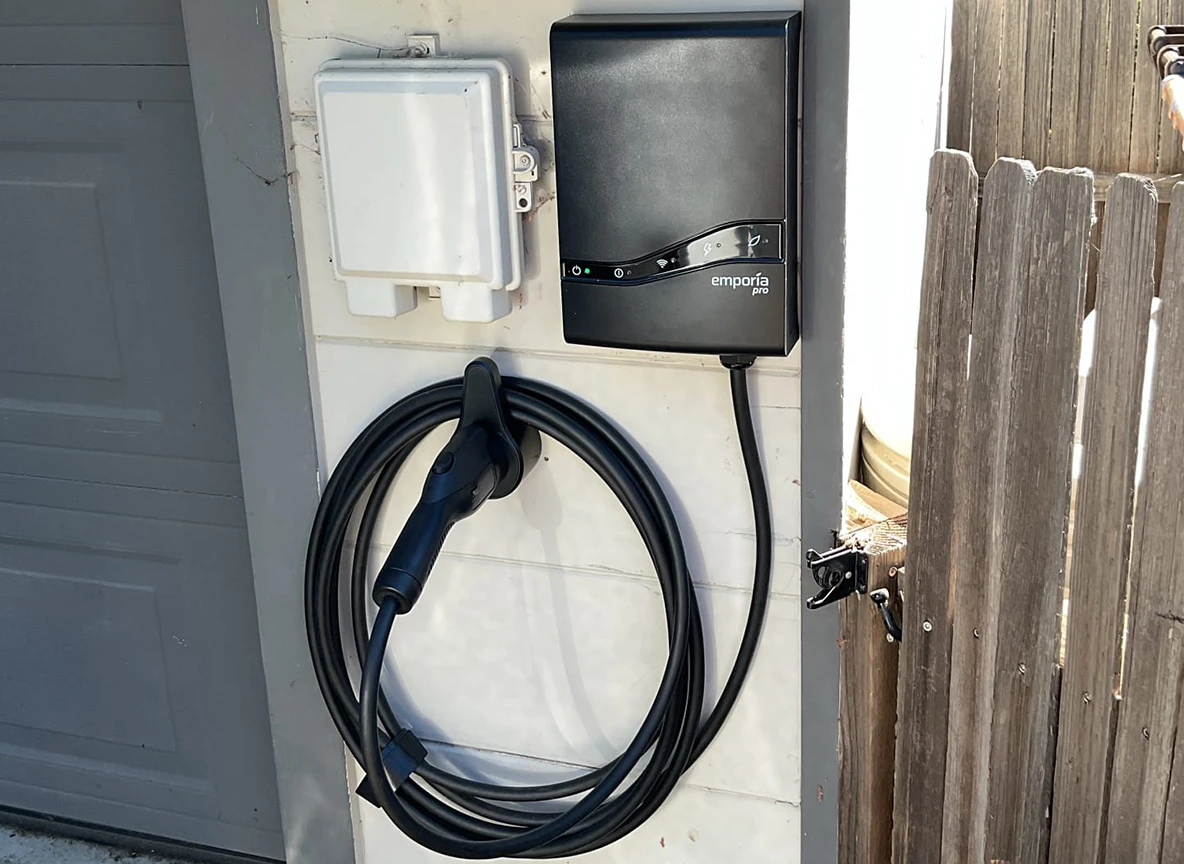
Rocky Hill Electric installs Level 2 EV chargers from leading manufacturers including Tesla, ChargePoint, JuiceBox, Emporia, and Wallbox. We are Tesla Energy certified, qualifying us to install the Tesla Wall Connector to manufacturer specifications. For non-Tesla vehicles, we recommend the charger that best fits your vehicle’s requirements and your property’s specific coastal installation context.
EV charger installation in Stinson Beach requires a permit through Marin County‘s Community Development Agency. We manage all permitting, inspection scheduling, and final closeout on your behalf. All work is fully code-compliant with the 2026 National Electrical Code and local amendments.
Areas We Serve Across Stinson Beach and West Marin
Rocky Hill Electric provides coastal EV charger installation services throughout all of Stinson Beach‘s neighborhoods and surrounding West Marin and Marin County communities, including:
- Stinson Beach town center
- Seadrift
- The Highlands
- Bolinas
- Muir Beach
- Point Reyes Station
- Inverness
- Nicasio
- Woodacre
- Fairfax
- Mill Valley
- San Anselmo
- San Rafael
- Novato
Whether your property is a beach cottage steps from the surf, a Seadrift lagoon home, or a hillside retreat above the Panoramic Highway, our licensed team serves your area.
Call Rocky Hill Electric for EV Charger Installation in Stinson Beach
Stinson Beach is worth charging up for. Whether you are a full-time resident commuting to Marin or a vacation homeowner who drives electric whenever you make the trip out to the coast, a properly installed EV charger means your vehicle is always ready when you are.
Rocky Hill Electric is your licensed, local choice for EV charger installation in Stinson Beach and coastal EV charger installation across West Marin, using marine-grade hardware and coastal-specific installation practices on every project.
We are Tesla Energy certified, SPAN certified, and Generac certified. From panel assessment and Level 2 EV charger installation through permitting and final inspection, our team handles every detail so your charger is installed correctly for the environment it will operate in.
From the beach cottages along Calle del Arroyo to the Seadrift lagoon homes, from the Highlands above Panoramic Highway to the hillsides above Bolinas Lagoon, we are your electrical team.
Schedule Your EV Charger Installation Consultation in Stinson Beach: Call 415-523-5201
FAQ: About EV Charger Installation in Stinson Beach
1. Why does a coastal marine environment require different EV charger installation hardware?
Salt-laden mist and ocean air accelerate corrosion on exposed metal components, electrical connectors, and hardware at a rate far beyond what inland properties experience. A standard indoor-rated charger mount or conduit fitting will degrade significantly faster outdoors in Stinson Beach than it would in a non-coastal environment. A proper coastal EV charger installation uses weather-tight connections, marine-grade mounting hardware, and enclosures rated for continuous salt-air exposure. Our team specifies this hardware as standard on every EV charger installation in Stinson Beach that we complete.
2. Does my older Stinson Beach home need a panel upgrade before EV charger installation?
Often, yes. Many beach cottages and mid-century properties have 100-amp panels that are already running near their capacity. A Level 2 EV charger installation requires a dedicated 50-amp circuit, which may not be available without a panel upgrade. We assess your panel during the initial site visit and provide a clear recommendation before any work is proposed. Our Stinson Beach panel upgrade page explains what that process involves for properties in this community.
3. Does EV charger installation in Stinson Beach require a permit?
Yes. Under the 2026 National Electrical Code, all Level 2 charger installations require a qualified, licensed electrician and a permit through Marin County's Community Development Agency. Rocky Hill Electric manages the entire permitting and inspection process on your behalf. All work is fully code-compliant from start to finish.
4. I own a vacation rental in Stinson Beach. Does an EV charger add meaningful value to my property?
Yes. Vacation rental listings advertising EV chargers are increasingly common in Stinson Beach, and EV-driving guests actively filter for properties with home charging. A home EV charger can raise your nightly rate, improve occupancy from EV owners, and position your listing above comparable properties that have not upgraded. Rocky Hill Electric handles EV charger installation in Stinson Beach at vacation properties where the owner is not always on-site, offering smart charger options that allow remote monitoring and access control.
5. What EV charger brands does Rocky Hill Electric install in Stinson Beach?
We install coastal EV charger equipment from Tesla, ChargePoint, JuiceBox, Emporia, and Wallbox. As a Tesla Energy certified installer, the team is qualified to install the Tesla Wall Connector to manufacturer standards. For non-Tesla EVs, our team recommends the charger and mounting configuration best suited to your vehicle and your property's coastal exposure profile.
6. How long does EV charger installation in Stinson Beach take?
A straightforward EV charger installation in Stinson Beach where the existing panel has adequate capacity typically takes one day from start to inspection. If a panel upgrade, additional circuit work, or a longer conduit run for a detached garage or hillside property is involved, the project may take two days. Rocky Hill Electric provides a clear timeline and itemized estimate before work begins, with no hidden charges and no surprises.
Still Have Questions? Let’s Talk