
There is a reason people hold onto Stinson Beach properties for generations–the beach cottages near town, the lagoon homes inside the private Seadrift community, the hillside retreats in the Highlands overlooking the Pacific and Bolinas Lagoon. These are not just houses. They are places people built their lives around, and they tend to stay in families for a long time.
That longevity is beautiful. It also means a lot of these homes are carrying electrical panels that were installed in the 1950s, 60s, or earlier, in a marine environment that has been quietly working against those panels ever since. The median construction year in Stinson Beach is 1959. Nearly 40% of homes were built before 1950. And every single home sits in coastal air where salt, humidity, and moisture accelerate the corrosion of electrical components faster than almost anywhere inland.
That is what makes an electrical panel upgrade in Stinson Beach different from the same job in Fairfax or San Anselmo. It is not just about capacity. It is about coastal electrical hazards that most homeowners have never been told to watch out for.
We are your licensed West Marin electrician for panel work across Stinson Beach and the surrounding communities.
Why Salt Air Changes Everything Here
What Corrosion Actually Does Inside a Panel
Salt air is not just atmosphere. Airborne salt particles combine with coastal humidity to attack the metals inside your electrical panel–the bus bars, breaker contacts, wire terminals, and connection points that your entire home depends on. And it does this faster and more completely than to any inland panel.
Research on marine aerosol corrosion confirms that salt air corrosion compounds over time rather than stabilizing. A panel that looked fine at year ten may be significantly compromised by year thirty, with corroded connections generating heat under load, while the exterior of the panel shows nothing unusual at all. That invisible internal failure is the defining characteristic of coastal electrical hazards in a beachfront community.
An electrical panel upgrade in Stinson Beach replaces that degraded infrastructure before it reaches a critical failure point. It is not just a precaution for people who worry too much. It is the right response to a documented environmental reality.
Three Property Types, Three Corrosion Profiles
Not every Stinson Beach property faces the same exposure. Beach cottages near town, many of which started as vacation rentals in the early 1900s, are the oldest and most directly hit by salt air off the Pacific. Their panels have often been in place for five or six decades with limited attention paid to maintenance.
Seadrift waterfront homes sit along lagoons and canals where moisture comes from multiple directions at once, layering ground-level humidity on top of the airborne salt that affects the whole community. Up in the Highlands, hillside properties face something different: direct wind exposure and salt-laden Pacific fog rolling in off Mount Tamalpais on a near-daily basis.
Each of these environments creates its own version of the coastal electrical hazards problem. As your West Marin electrician, Rocky Hill Electric accounts for all three when assessing a property, because the right approach to a panel replacement in Stinson Beach depends on where the home actually sits and what it has been exposed to.
Warning Signs Worth Paying Attention To
The Coastal-Specific Signals
In most communities, electrical panel warning signs are operational: breakers tripping, lights flickering, that kind of thing. In Stinson Beach, the most telling signs are often physical, and they show up on the panel itself before the system starts noticeably misbehaving.
There may be visible rust or discoloration on the panel cover. White mineral deposits around connections. Breakers that feel stiff or gritty when you try to reset them. A faint metallic or burning smell near the panel that you cannot trace to an appliance. These are the fingerprints of coastal electrical hazards inside your panel. Most homeowners never know to look for them until a licensed West Marin electrician points them out during an inspection.
The Standard Warning Signs Apply As Well
The operational warnings matter just as much: Breakers that trip repeatedly on the same circuit. Lights that flicker across multiple rooms at once. A panel cover that feels warm to the touch. Buzzing, crackling, or hissing sounds from the panel area. Any of these points toward a panel that needs a professional inspection.
The National Fire Protection Association (NFPA) consistently identifies electrical failures as a leading cause of residential structure fires. In a community where an aging housing stock and coastal electrical hazards compound each other, those statistics matter more than they do almost anywhere else. Our post on electrical panel upgrade work in Point Reyes Station covers similar West Marin aging home conditions and offers a useful parallel for what an assessment involves.
The Legacy Panel Problem
Homes built between the 1950s and 1980s across Stinson Beach, in Seadrift, the Highlands, and along the streets off Highway 1, may still have Federal Pacific Electric (FPE) Stab-Lok or Zinsco panels. Both brands have well-documented breaker failure histories. Layer decades of coastal electrical hazards on top of those inherent failure modes, and the risk profile becomes something that should not be ignored. If either brand name appears on your panel, a replacement is the appropriate response; this warrants further action than a conversation about whether to wait another season.
What a Modern Panel Actually Delivers
Infrastructure Built for the Environment
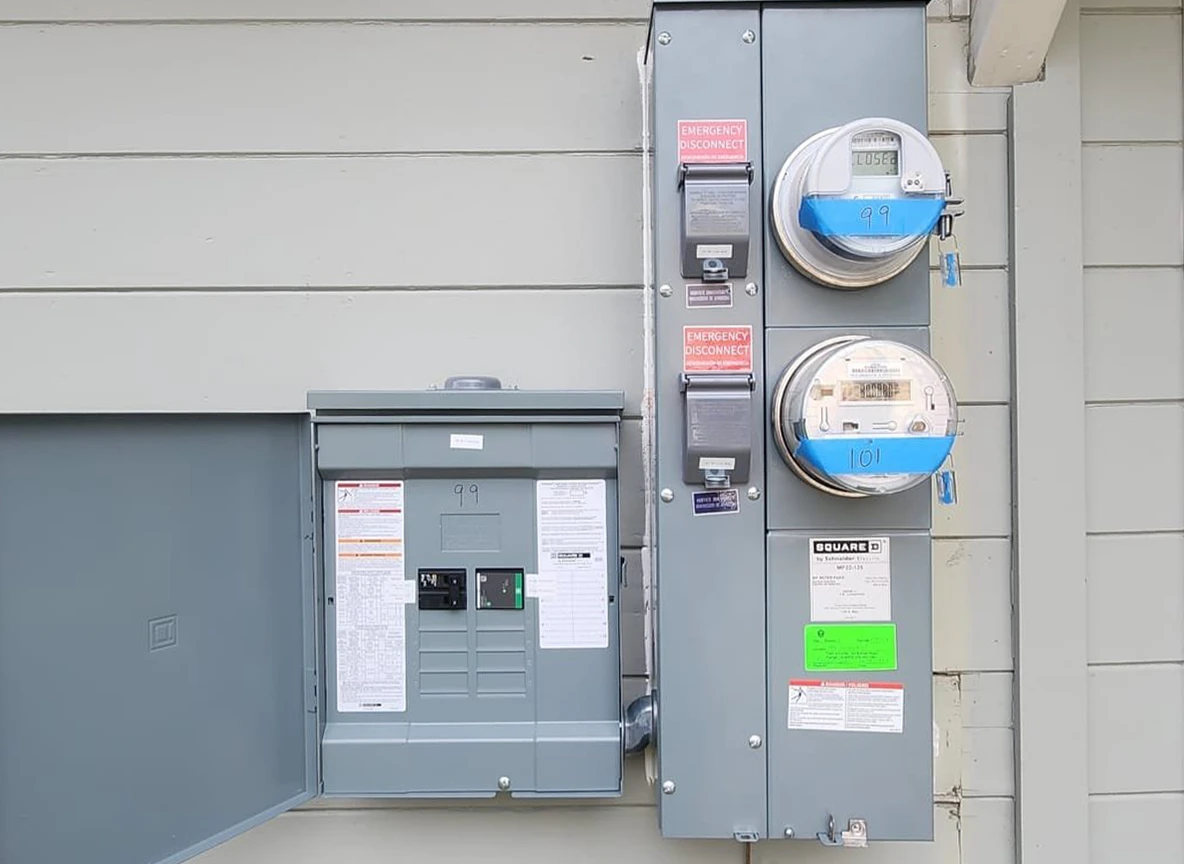
A modern electrical panel upgrade in Stinson Beach does more than just increase capacity. It replaces decades of corroded connections with new components that are manufactured to current material and construction standards. These components are meaningfully more resistant to the coastal electrical hazards of a marine environment than what is inside most mid-century panels.
Modern panels include arc-fault circuit interrupters (AFCIs) and ground-fault circuit interrupters (GFCIs), which the National Electrical Code (NEC) requires in new installations. These protections work whether or not anyone is home, which matters for a community with a significant share of vacation properties. For Seadrift homes and beachfront cottages with the highest moisture exposure, our team considers panel placement and enclosure options that provide additional defense against ongoing salt air intrusion.
Capacity and Modern Capabilities
A standard panel replacement in Stinson Beach moves a property from 60-amp or 100-amp service to modern 200-amp service, creating real headroom for EV charger installation, solar and battery storage, and modern HVAC without straining the system.
Rocky Hill Electric is SPAN certified, which means we can install a smart panel that gives you real-time, circuit-level visibility through a smartphone app. For vacation homeowners who are not always at the property, that remote monitoring is genuinely useful. Unusual circuit activity shows up on your phone before it becomes a problem. You can also learn about pairing your panel upgrade with our standby generator work in Stinson Beach, for a complete home resilience approach.
The Insurance Reality
Many California homeowner’s insurance carriers flag aging panels and known hazardous brands during renewals. A completed panel replacement in Stinson Beach with a modern, properly rated panel removes that flag. For properties worth $2 million or more, which is not unusual in this market, maintaining full insurance coverage is not a minor line item. It is part of protecting the investment.
What the Process Looks Like With Rocky Hill Electric
A Coastal-Context Assessment
Every electrical panel upgrade starts with a site assessment that accounts specifically for the coastal environment. Our Stinson Beach electrician team evaluates panel brand, age, service amperage, and visible condition, including any corrosion, moisture intrusion, or connection degradation specific to the marine setting. This goes deeper than a standard inland panel inspection because coastal electrical hazards require closer attention.
Permits and Installation
Panel replacement in Stinson Beach requires a permit through Marin County’s Community Development Agency, plus PG&E coordination for any service entrance work. We manage all of that on your behalf, including inspection scheduling and permit closeout. All work is code-compliant from day one, and nothing starts until you have a clear estimate and timeline in hand.
A standard electrical panel upgrade in Stinson Beach typically takes one to two days. Coastal-specific enclosure work, service entrance upgrades, or a wiring assessment alongside the panel may extend that timeline.
And you can rest easy knowing that we provide a comprehensive overview before any work begins. Our process ensures there are no surprises or hidden fees to worry about.
Areas We Serve Across Stinson Beach and West Marin
Rocky Hill Electric provides services such as an electrical panel upgrade in Stinson Beach and comprehensive electrical work across all of Stinson Beach‘s neighborhoods and surrounding West Marin communities, including:
- Stinson Beach town center
- Seadrift
- The Highlands
- Bolinas
- Muir Beach
- Point Reyes Station
- Inverness
- Nicasio
- Woodacre
- Forest Knolls
- Lagunitas
- Fairfax
- Mill Valley
- San Rafael
Whether your home is a beach cottage steps from the surf, a Seadrift lagoon property, or a hillside retreat above Panoramic Highway, your licensed West Marin electrician team is nearby and ready to help.
Call Rocky Hill Electric for Your Electrical Panel Upgrade in Stinson Beach
Stinson Beach properties do not come along often, and they are worth protecting with the care they deserve. An aging panel in a coastal marine environment poses coastal electrical hazard risks that compound quietly with every season. The risk does not announce itself until something goes wrong. Rocky Hill Electric is your licensed, local West Marin electrician for an electrical panel upgrade and panel replacement in Stinson Beach, serving every neighborhood in the community.
We are SPAN certified, Tesla Energy certified, and Generac certified. From a thorough coastal-context assessment through permitted installation and final inspection, our team handles every detail so your home’s electrical system is safe, modern, and built to last in this environment.
From the Seadrift lagoons to the Highlands above Panoramic Highway, from the beach cottages along Highway 1 to the hillside houses above Bolinas Lagoon, we are your Stinson Beach electrical team.
Schedule Your Panel Upgrade Consultation in Stinson Beach: Call 415-523-5201
FAQ: About an Electrical Panel Upgrade in Stinson Beach
1. Why does salt air make an electrical panel upgrade more urgent in Stinson Beach than in inland Marin?
Because the marine environment does not stop contributing to the degradation of electrical components. Salt air corrosion attacks bus bars, breaker contacts, and wire terminals continuously, and its effects compound over time rather than stabilizing. A panel that has spent 30 or 40 years in Stinson Beach's coastal air has experienced internal degradation that looks fine from the outside but creates real failures and fire risks underneath. That compounding exposure is at the core of coastal electrical hazards here, and it is why an electrical panel upgrade in Stinson Beach carries more urgency than the same job inland.
2. What should I look for if I think my panel has been affected by coastal corrosion?
Check the panel cover and surrounding area for visible rust, discoloration, or white mineral deposits. If any breakers feel stiff or gritty when you try to reset them, that is contact corrosion. A faint metallic or burning smell near the panel that you cannot trace to an appliance is a sign of heat building in corroded connections. Any of those signs warrants a professional inspection. We provide free estimates and fully assess the condition of the panel during the site visit.
3. Does a panel replacement in Stinson Beach require a permit?
Yes. Panel replacement in Stinson Beach, along with any associated service upgrade, requires a permit through Marin County's Community Development Agency. Rocky Hill Electric manages all permitting, PG&E coordination, and final inspection scheduling. All work is fully code-compliant and inspection-ready from start to finish.
4. I own a vacation property in Stinson Beach and am rarely there. How does a panel upgrade help when the house is empty?
A modern panel with AFCI protection cuts power automatically when it detects dangerous arc faults, even with no one home. Rocky Hill Electric's SPAN smart panel option goes further, sending real-time circuit activity alerts to your phone so you know what is happening at the property from wherever you are. A panel replacement in Stinson Beach with smart panel integration gives vacation homeowners real protection and real visibility, not just theoretical peace of mind.
5. Can I add an EV charger or solar to my home without upgrading the panel first?
Sometimes. If the existing panel has available capacity and is in reasonable condition despite the coastal environment, smaller additions may be possible. But a Level 2 EV charger needs a dedicated 50-amp circuit, and solar with battery storage usually requires 200-amp service. We check your panel before recommending anything. An electrical panel upgrade in Stinson Beach often makes the most sense as part of a coordinated project that includes the EV charger or solar work at the same time.
6. How long does an electrical panel upgrade in Stinson Beach typically take?
A standard electrical panel upgrade in Stinson Beach takes one to two days including permitting and final inspection. Projects with coastal-specific enclosure work, service entrance upgrades, or additional wiring assessment may run longer. Our team gives you a clear timeline and an itemized estimate before anything starts. There are no hidden charges and no surprises on the day of the job.
Still Have Questions? Let’s Talk