Point Reyes Station is the kind of place people drive through and immediately wish they lived here. The small town along State Route 1 has always been the practical center of West Marin life, where residents of Inverness, Nicasio, Marshall, and Olema come for groceries, the post office, a meal at Osteria Stellina, or a coffee before heading into the Giacomini Wetlands. It is also, quietly, one of the most environmentally serious communities in Marin County.
So it might surprise you to learn how thin the public EV charging infrastructure actually is here. The West Marin Multi-Service Center on 6th Street has two ChargePoint Level 2 ports, with a reliability record that local drivers have noticed. The free solar chargers at Bear Valley Visitor Center are a nice amenity for park visitors, but they run on a first-come, first-served basis and were never designed for the daily needs of someone commuting to San Rafael or Mill Valley. If you drive electric and live here, you already know the friction this creates.
We are your trusted West Marin electrician for EV charger installation in Point Reyes Station. We help homeowners take that problem off the table by correctly installing a reliable home EV charger, fully permitted and ready to use every single day.
Why Public Charging in Point Reyes Station Is Not Enough
The Infrastructure Gap Is Real
The County of Marin operates only two public charging stations at the West Marin Multi-Service Center at 6th Street. Two ports for a community hub that serves thousands of residents is a real limitation. During peak visitor season, those ports are often occupied by tourists headed to Point Reyes National Seashore rather than locals with somewhere to be.
The three free EV charging stations at the Bear Valley Visitor Center operate on a first-come, first-served basis and run on solar electricity generated on-site. The solar dependency is worth noting. Output varies with weather conditions, and availability is never guaranteed. These chargers were installed for national park visitors, not as a reliable resource for Point Reyes Station homeowners who need a full charge every morning.
The Transportation Authority of Marin (TAM) actively promotes EV adoption across the county and acknowledges the infrastructure gap. And that gap is not closing quickly. Until it does, a home EV charger is the only honest answer for daily charging in this community. An EV charger installation in Point Reyes Station is the conclusion every West Marin EV owner eventually reaches.
The Math Does Not Work With Public Charging
Think about a typical weekday. You commute from Point Reyes Station to San Rafael and back. That is 40 to 55 miles depending on your route. Your EV handles it fine. But recovering that range at a public Level 2 port that may or may not be available, charges $1 an hour for shared output, and has a history of intermittent reliability? That is not a system. That is a daily gamble.
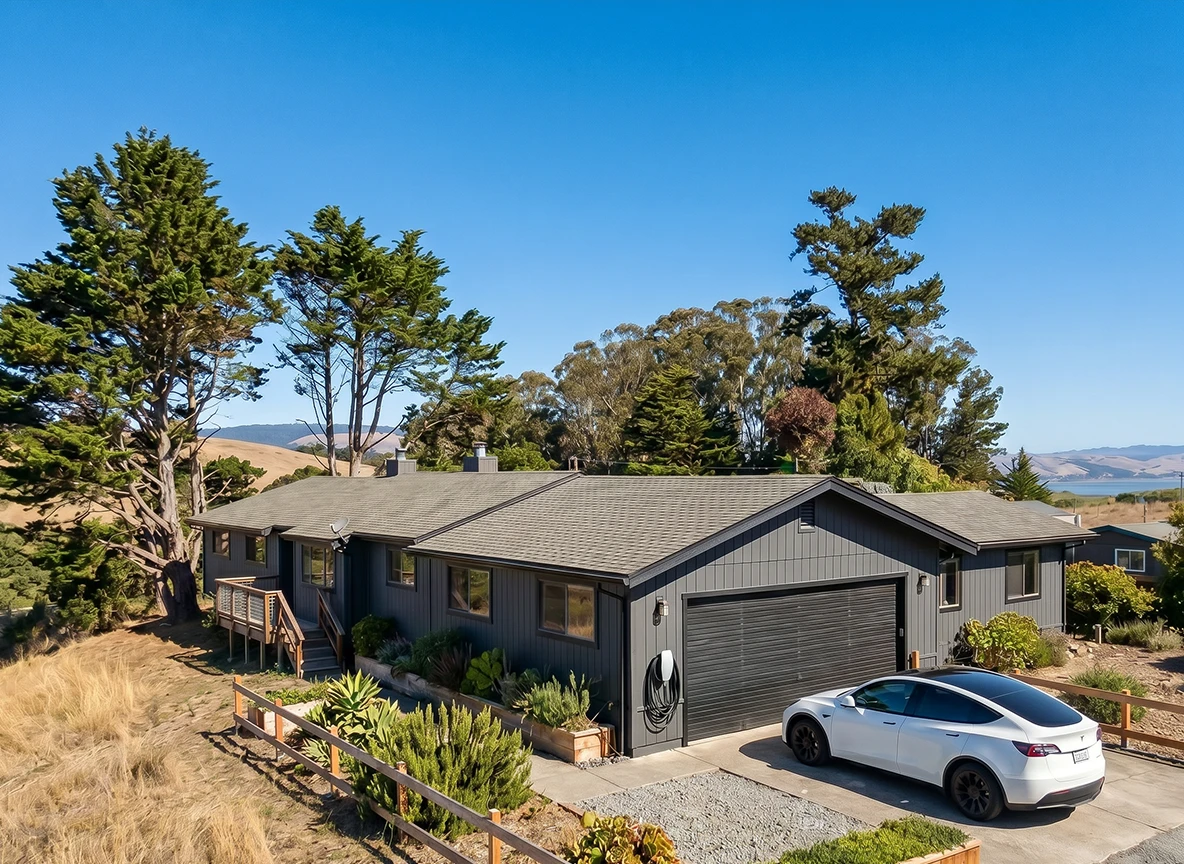
A home EV charger on a dedicated 240-volt circuit changes the whole picture. Your car charges overnight. Every morning it is full. No queuing, no planning, no driving out of your way. That is what a proper level 2 charger installation at your home actually delivers, and it is why most EV owners who make the switch say they should have done it sooner. As your local West Marin electrician, we make it simple.
What EV Charger Installation in Point Reyes Station Actually Involves
It Starts With Your Electrical Panel
Before any charger goes on your wall, your electrical panel needs to be considered. A level 2 charger installation draws on a dedicated 50-amp circuit at 240 volts. If your panel is a 100-amp service that is already working hard, that circuit may require some upgrades to make it available.
A lot of homes in Point Reyes Station were built in the mid-20th century. Some were built even earlier. Properties along State Route 1 and the back roads toward Tomales Bay and Inverness Ridge were not designed with modern electrical loads in mind. That is not necessarily a problem, but it is something we assess before we start. Our panel upgrade services cover you if an upgrade is part of what your home needs alongside the charger installation.
The Installation Itself
Once the panel situation is sorted, your West Marin electrician installs the dedicated 240-volt circuit that powers the home EV charger. In older Point Reyes Station properties, this often means running conduit along exterior walls, through a crawl space, or across a garage ceiling. The path depends on where your panel is and where you want the charger to be located.
Rocky Hill Electric plans every level 2 charger installation around the actual layout of your property, not a generic template. The work is clean, the routes are thoughtful, and everything is fully permitted through Marin County’s Community Development Agency before we start. Our EV charger installation service page has more detail on the full process.
Choosing the Right Charger
Not every home EV charger is the same, and the right choice depends on your vehicle, your daily driving distance, and whether you want smart features like scheduled charging or energy monitoring. We install equipment from Tesla, ChargePoint, JuiceBox, Emporia, and Wallbox.
And speaking of Tesla, we are Tesla Energy certified, which means we install the Tesla Wall Connector to the manufacturer’s exact specifications.
If you are thinking about pairing your level 2 charger installation with solar or battery storage, we can coordinate that as part of the same project. Rocky Hill Electric is also SPAN certified, so if you want a smart panel that gives you real-time visibility over every circuit in your home, including your EV charger, we can build that in from the start.
Older Homes and EV Charger Installation in Point Reyes Station
What Rural Properties Usually Need First
Point Reyes Station’s housing stock is a mix of historic ranch homes, mid-century residences, and rural buildings that have probably never seen a major electrical update. These properties are beautiful. But they are also frequently underprepared for a level 2 charger installation without some groundwork.
Common situations include panels with no open breaker slots, original wiring that is not rated for a high-draw dedicated circuit, and garages or outbuildings that run off a subpanel rather than the main service. None of these stops an installation from happening. But each one requires an electrician who actually looks at what is there before quoting anything.
We assess the full picture, from your panel through your preferred charger location, before we propose a single dollar of work. Our residential electrical services cover the wiring and panel work that often comes with a home EV charger installation in an older property.
When It Makes Sense To Bundle Projects
If your home needs a panel upgrade and an EV charger, doing both at once is almost always the smarter call. It’s one permit process, one timeline, one project to manage. You get 200-amp service, and your home EV charger circuit in a single coordinated installation, and your panel is ready for whatever comes next, whether that is solar, battery storage, or a standby generator.
Speaking of generators, if backup power for PSPS season is on your mind, our standby generator installation service works alongside EV charger and panel projects across West Marin. A proper level 2 charger installation paired with a generator transfer switch gives you full energy independence in any season.
Areas We Serve Across Point Reyes Station and West Marin
Rocky Hill Electric provides EV charger installation in Point Reyes Station and comprehensive electrical services throughout all of West Marin and surrounding Marin County communities, including:
- Point Reyes Station
- Inverness
- Inverness Park
- Marshall
- Olema
- Nicasio
- Woodacre
- Forest Knolls
- Lagunitas
- Stinson Beach
- Bolinas
- Muir Beach
- Fairfax
- San Anselmo
- San Rafael
- Mill Valley
Whether your home sits along State Route 1 near the Giacomini Wetlands, on a back road toward Tomales Bay, or off Bear Valley Road in the shadow of Inverness Ridge, our licensed West Marin electrician team serves your area.
Call Rocky Hill Electric for EV Charger Installation in Point Reyes Station
Point Reyes Station has always been a community that thinks ahead–about land use, about the environment, about what kind of place West Marin should be. Driving electric fits that identity perfectly. But it only works well when your home has the charging setup to support your EV.
Rocky Hill Electric is your licensed, local electrician for EV charger installation in Point Reyes Station, serving homeowners from Inverness to Nicasio, from Marshall to Olema, and throughout the West Marin valleys. We are Tesla Energy certified, SPAN certified, and Generac certified. From panel check through level 2 charger installation and final inspection, we handle every step so your residential EV charger is in the right place, installed correctly, and ready for the long haul.
From Bear Valley Road to Tomales Bay, from the Giacomini Wetlands to the back roads of Nicasio Valley, we are your West Marin electrical team.
Schedule Your EV Charger Installation Consultation in Point Reyes Station: Call 415-523-5201
FAQ: About EV Charger Installation in Point Reyes Station
1. Why can't I just use the public chargers in Point Reyes Station instead of installing a home EV charger?
You can try. But the two ChargePoint ports at the West Marin Multi-Service Center are frequently occupied, and the solar chargers at Bear Valley Visitor Center were designed for park visitors on a first-come, first-served basis, not daily residential use. For a commuter, that infrastructure is too unreliable to count on. A home EV charger gives you a full charge every morning without any of that friction. It is the only setup that actually works for daily EV driving in West Marin.
2. Does my older Point Reyes Station home need a panel upgrade before EV charger installation?
Often, yes. Many mid-century and historic homes in the area have 100-amp panels that are already close to their limit. A level 2 charger installation requires a dedicated 50-amp circuit, and if there is no room in your current panel, an upgrade comes first. Our team checks your panel during the initial site visit and tells you exactly what is needed before proposing any work.
3. Does EV charger installation in Point Reyes Station require a permit?
Yes. EV charger installation in Point Reyes Station requires a permit from Marin County's Community Development Agency, covering the dedicated circuit and any panel work involved. Rocky Hill Electric handles the entire permitting process as part of the job. You do not need to navigate the county system yourself. Everything is code-compliant and inspection-ready from start to finish.
4. What EV charger brands does Rocky Hill Electric install?
Rocky Hill Electric installs home EV charger equipment from Tesla, ChargePoint, JuiceBox, Emporia, and Wallbox. As a Tesla Energy certified installer, the team is qualified to install the Tesla Wall Connector to manufacturer standards. For non-Tesla vehicles, we recommend the charger that best fits your vehicle's requirements and your home's electrical system.
5. Can I combine EV charger installation with solar or a standby generator in the same project?
Yes, and it usually makes sense to do so. Solar, battery storage, and EV charger installation in Point Reyes Station can share one permit process and one installation timeline. A level 2 charger installation paired with a generator transfer switch gives your home full energy independence year-round. Rocky Hill Electric designs the full scope before any work begins, so everything fits together correctly from day one.
6. How long does EV charger installation in Point Reyes Station take?
If your panel has adequate capacity and the circuit path is straightforward, a day is usually enough from start to inspection. If a panel upgrade or additional wiring work is involved, plan for two days. Our professionals give you a clear timeline and an itemized estimate before anything starts. No surprises on the day of the job, and no hidden charges afterward.
Still Have Questions? Let’s Talk