
You bring the new EV home, pull it into the garage, and plug it into the nearest outlet. Then you see the estimate: two full days to charge. The car is brand new, but the garage wiring was built decades before anyone charged a car at home.
That gap is where most Marin County homeowners get stuck. In San Rafael, it usually shows up in one of two places. One is a condo or townhome with a shared electrical room. The other is a 1940s to 1960s house with a detached or tuck-under garage. Both can support home charging. They just need different things to get there.
This guide walks through what EV charger outlet installation in San Rafael really involves for each situation. You’ll see what affects the price and where a smart electrical panel can save you from a bigger upgrade. You’ll also learn how to avoid the surprises that turn a simple outlet into a weekend of headaches.
Outlet or Wall Charger? Start With How You Drive
Every EV charger outlet installation starts with one question: what are you plugging in? Most owners choose between two setups.
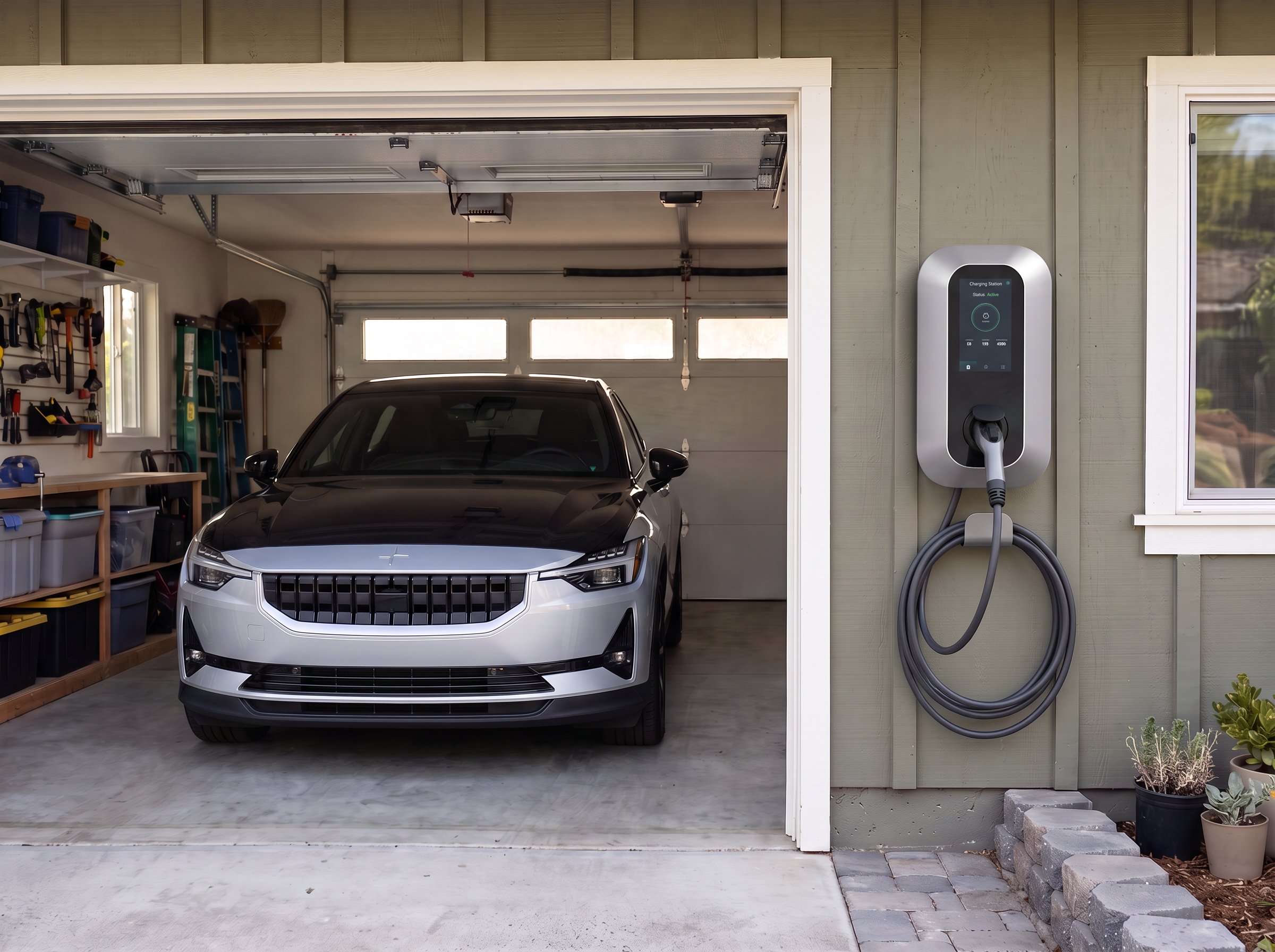
A 240V outlet, usually a NEMA 14-50, lets you plug in the mobile charger that came with your car. It’s flexible, portable, and simple to replace. A hardwired Level 2 wall charger connects directly to the circuit, often charges a bit faster, and handles outdoor locations better.
Either way, the circuit has to be sized correctly. EV charging is what electricians call a continuous load, because it pulls steady power for hours. Code requires the circuit to be rated at 125% of the charging current. That’s why a charger drawing 32 amps sits on a 40-amp circuit.
For most San Rafael drivers, that’s plenty. A 40-amp circuit adds roughly 25 to 30 miles of range per hour. A round trip down Highway 101 to San Francisco, or a few errands at Northgate, refills overnight with time to spare. Drivers elsewhere in Marin County have seen the same thing, as we covered in our look at home EV charging in Fairfax.
What Condos and Townhomes Need
Condo charging is less about the outlet and more about logistics. The electrical work is usually simple. Getting power from your meter to your parking space is the hard part. That’s why EV charger outlet installation in San Rafael condos starts with paperwork, not wire.
HOA Approval and California’s Right-to-Charge Law
California’s Civil Code Section 4745 protects your right to install a charger in a common interest development. An HOA can’t flatly prohibit it or impose unreasonable restrictions that drive the cost way up.
That doesn’t mean you can skip the HOA. You’ll still submit an application, and the association can set reasonable rules. Expect requirements like these:
- Licensed installation. The association can require a licensed electrician and a city permit.
- Liability insurance. Many HOAs ask the owner to carry coverage that names the association.
- Cost responsibility. The owner typically covers the 240V outlet installation cost, maintenance, and the electricity used.
- Restoration terms. Some associations require removal or repair if you sell or move the charger.
Get the HOA’s written approval before work starts. It protects you and keeps the project from stalling halfway through.
Where the Power Comes From
In most buildings, your unit has its own meter and panel, often in a shared electrical room. The best path is to run a new circuit from your own panel to your assigned space. That way charging shows up on your PG&E bill, not the building’s.
The challenge is distance. Electrical rooms and parking stalls are rarely next to each other. A long run needs larger wire to prevent voltage drop, and that raises the 240V outlet installation cost. Before installing anything, a good electrician will also run a load calculation to confirm your unit’s service can handle the new circuit.
Shared Garages and Carports
Shared garages raise practical questions. Where does the conduit run? Does it cross common areas? Can it be mounted without blocking a neighbor’s space?
Condo and townhome communities across San Rafael, from Terra Linda to Northgate and the Canal neighborhood, each have their own layouts and rules. Bringing the property manager in early saves weeks. Clear plans and photos of the proposed conduit route usually speed up HOA review.
What Older San Rafael Garages Need
Older San Rafael homes have plenty of character, and plenty of wiring that predates electric cars by half a century. Neighborhoods like Gerstle Park, Dominican, and Sun Valley are full of houses built when 60 or 100 amps of service seemed generous. The same is true across older parts of Mill Valley and much of southern Marin County.
Undersized Service
A 40-amp EV circuit is a big ask for a 100-amp panel that already runs an electric dryer, a range, and a heat pump. Sometimes the math works. Sometimes it doesn’t.
That’s why, in older homes, a load calculation comes before any EV charger outlet installation in San Rafael. It compares your home’s existing demand with the panel’s capacity. If there’s room, the outlet goes in. If not, you have options. One is a panel upgrade, the same fix many older homes in nearby San Anselmo have needed. The other is a smart electrical panel.
Detached Garages
Plenty of older Marin County homes have a detached garage at the end of a driveway or down a slope. Getting power there usually means one of three things:
- An existing feeder. If the garage already has a circuit, it may be too small for EV charging and need replacing.
- A new feeder and subpanel. This is the cleanest long-term setup, giving the garage its own capacity for a charger, lights, and tools.
- Trenching. Underground runs need proper depth and conduit. Hillside lots and mature landscaping add complexity.
Wiring Red Flags
Older garages often hide problems that need fixing before adding a high-demand circuit. Watch for ungrounded outlets, cloth-insulated wire, and DIY extensions added over the years. Certain older panel brands also carry known safety concerns.
If your home was built before the 1970s, our guide to older home wiring upgrades in San Rafael explains what to fix first. Planning an EV charger outlet installation is a good moment to address those issues. An electrician is already opening up the system.
Where a Smart Electrical Panel Fits
Here’s the good news for homes with limited capacity. A full service upgrade isn’t always the only answer.
A smart electrical panel monitors every circuit in real time and can manage loads automatically. When the dryer and the oven are running, it can slow or pause EV charging. Once demand drops, charging picks back up. Your car still charges overnight, and your service never gets overloaded.
For many Marin County homes, that’s the difference between adding EV charging now and waiting on a costly utility service upgrade. It can also keep the 240V outlet installation cost well below what a full upgrade would run. A smart panel also gives you an app view of your home’s energy use, which tech-minded homeowners tend to love.
Rocky Hill Electric is SPAN certified, so our electricians install and configure SPAN smart panels correctly. We’re also Tesla Energy certified. If you’re thinking about solar, home battery backup, or a standby generator later, a smart panel gives you a strong foundation to build on.
What Drives 240V Outlet Installation Cost
There’s no single price for an EV outlet, because no two garages are the same. For EV charger outlet installation in San Rafael, the 240V outlet installation cost depends on a handful of factors. A site visit pins them down quickly.
These are the biggest cost drivers:
- Distance from the panel. A garage outlet a few feet from the panel is simple. A 100-foot run to a condo parking stall needs more wire, conduit, and labor.
- Available panel capacity. If your panel has open space and spare capacity, the job stays straightforward. If not, you may need a subpanel, a smart electrical panel, or a service upgrade.
- Routing. Finished walls, ceilings, and concrete take more time than an open garage stud wall. Trenching to a detached garage adds more.
- Code requirements. Under Section 210.8(A) of the California Electrical Code, 240V receptacles in a garage need GFCI protection, which affects which breaker your electrician can use.
- Permit and inspection. Like any new circuit, this work needs a permit from the City of San Rafael.
- Outlet vs. hardwired charger. Hardwiring a wall charger can change both the circuit and the labor involved.
That’s why next-door neighbors in San Rafael can get very different estimates for the same job. At Rocky Hill Electric, you get upfront pricing, with no hidden costs or surprise upcharges. You’ll know the full 240V outlet installation cost and scope before any work begins.
It’s also worth checking current incentives. PG&E offers EV-specific rate plans that make overnight charging cheaper. MCE also runs programs for Marin County customers from time to time. Availability changes, so confirm the details before you plan around them.
Permits and Inspection in San Rafael
EV charger outlet installation in San Rafael requires a permit from the City of San Rafael Building Division. The city offers expedited permitting for EV charging stations, which keeps most residential projects moving. A city inspector checks the work after installation.
Some homeowners see permits as a hassle. In practice, they protect you. An inspected installation confirms the wire size, breaker, grounding, and GFCI protection are correct. That matters for your homeowners insurance, and it matters when you sell. Buyers and their inspectors will ask about unpermitted garage wiring.
A licensed electrician takes care of the permit as part of the job. Rocky Hill Electric holds California license #1113478 and handles permitting for every installation we do in San Rafael and across Marin County.
Areas We Serve
Rocky Hill Electric is based at 4330 Redwood Highway in San Rafael, CA, and serves homeowners across Marin County. Our electricians work in every San Rafael neighborhood, from Terra Linda and Lucas Valley to Gerstle Park, Dominican, Peacock Gap, and Glenwood.
We also serve homeowners throughout the county:
- San Rafael
- San Anselmo
- Fairfax
- Mill Valley
- Novato
- Larkspur
- Corte Madera
- Kentfield
- Greenbrae
- Tiburon
- Sausalito
Ready to Charge at Home?
Maybe you live in a Terra Linda townhome. Maybe it’s a Gerstle Park bungalow with a 1950s garage. Either way, there’s a safe, code-compliant way to charge at home. For EV charger outlet installation in San Rafael and throughout Marin County, Rocky Hill Electric has you covered. Our electricians plan the right setup, handle the permit, and do the job right the first time.
Our promise is simple. Reliable, high-quality electrical services, or you don’t pay a dime. Book any service and you’ll also receive a free home electrical safety check.
Schedule Your EV Outlet Installation: 415-523-5201
Frequently Asked Questions About EV Charger Outlet Installation in San Rafael
1. Can my HOA stop me from installing an EV charger outlet?
Not outright. California Civil Code Section 4745 prevents HOAs from prohibiting EV chargers or setting unreasonable restrictions. The association can still require an application, a licensed electrician, a permit, and liability insurance. Get written approval before work begins.
2. Should I install a 240V outlet or a hardwired wall charger?
A NEMA 14-50 outlet works well if you want flexibility and plan to use the mobile charger that came with your car. A hardwired wall charger suits outdoor locations and drivers who want a permanent setup. Both need a properly sized 240V circuit.
3. Is my panel big enough for EV charging?
It depends on your panel's rating and what your home already uses. Many older homes in San Rafael have 60 to 100 amp service. A load calculation shows whether you have room, need a subpanel, or would benefit from a smart electrical panel.
4. What affects the 240V outlet installation cost?
The 240V outlet installation cost mostly comes down to distance from the panel, available capacity, how the wire is routed, and permit requirements. Condo parking stalls and detached garages usually cost more than an attached garage near the panel. Rocky Hill Electric provides upfront pricing before work starts.
5. Do I need a permit for EV charger outlet installation in San Rafael?
Yes. The City of San Rafael requires an electrical permit and inspection for a new 240V EV circuit. A licensed electrician pulls the permit as part of the job. Permitted work protects your insurance coverage and resale value.
6. How long does EV charger outlet installation in San Rafael take?
A straightforward garage outlet near the panel is often done in a single day. Condo installations with long runs, detached garages that need trenching, or projects that include a panel upgrade can take longer. HOA approval and permit timing also affect the schedule.
Still Have Questions? Let’s Talk